Travel
The Park Road That Makes You Pull Over
The best park roads are not the fastest ones. They are the ones that keep asking you to stop, step outside, and look again.
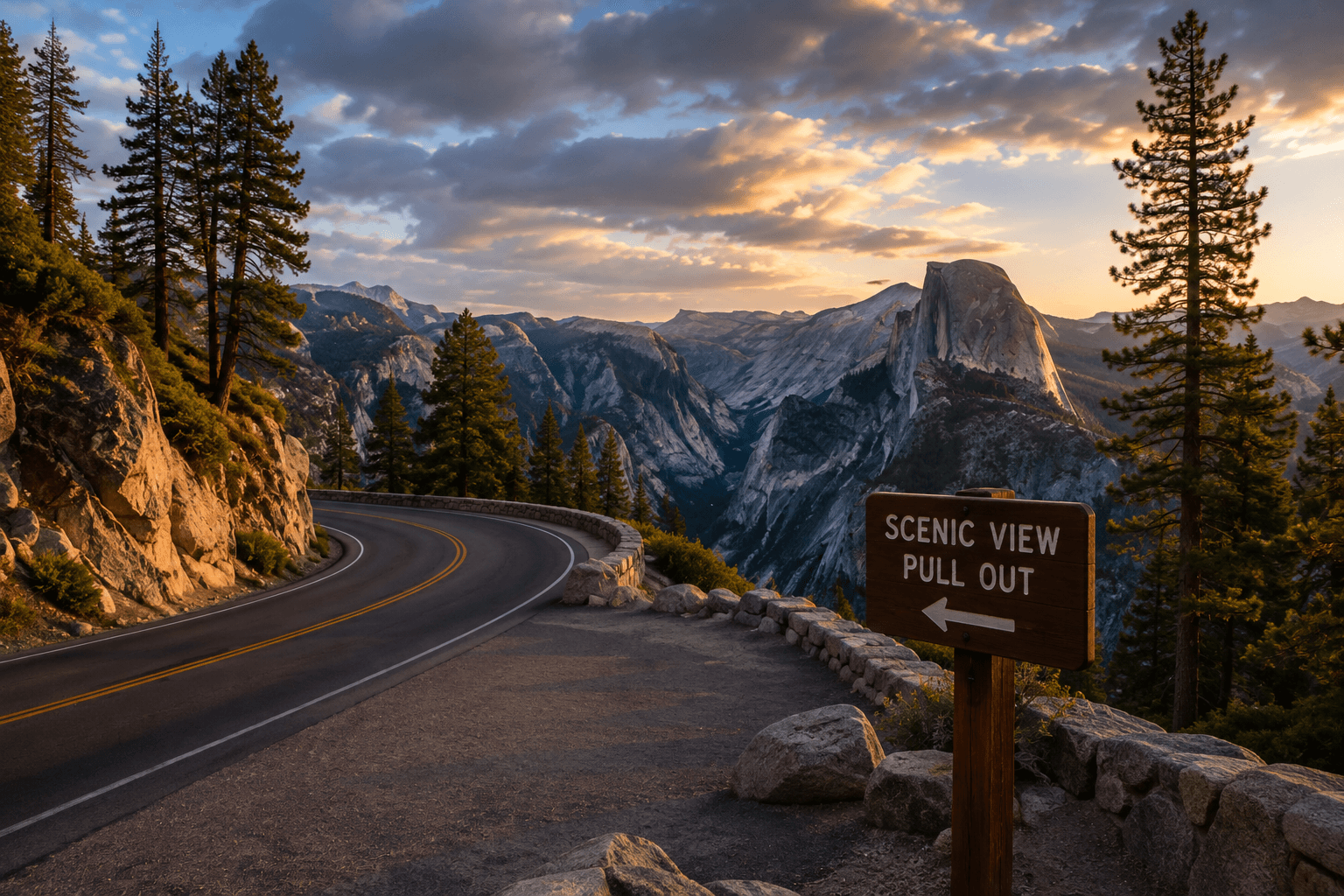
The Park Road That Makes You Pull Over
Some roads are designed to get you somewhere.
The best park roads do something else entirely.
They slow you down. They make you forget how long the drive was supposed to take. They keep presenting another overlook, another curve, another stretch of landscape that looks completely different from the one you passed ten minutes earlier.
You start the day thinking the road is simply how you will reach the trail.
Then the road becomes the thing you remember.
The best scenic drives are built around interruption
A good park road does not reward efficiency.
It rewards curiosity.
You see a pullout and stop.
You notice a canyon getting deeper.
A mountain appears through trees.
Clouds move across a ridge and suddenly the entire scene changes.
You keep thinking, this might be the best view of the day.
Then another one appears.
That is the rhythm.
Drive.
Notice.
Stop.
Repeat.
Leave more time than the map says
Scenic park roads almost always take longer than expected.
Not because they are necessarily difficult.
Because you keep stopping.
A forty-mile drive can easily become half a day when every few miles offers something worth seeing.
That is not poor planning.
That is the point.
If the route is beautiful enough, the estimated drive time becomes almost irrelevant.
Give yourself room to wander.
Pull over when something catches your eye
Not every stop needs to be famous.
Some of the best moments happen at unnamed turnouts.
A patch of morning fog.
A bend in a river.
A strange rock formation.
A meadow suddenly opening beside the road.
The big overlooks will still be there.
But the unplanned stops are often the ones that make the drive feel personal.
You noticed something.
You stopped.
That became part of your trip.
Take the first drive early
If you are staying near a National Park, drive one scenic road early in the morning.
Before parking lots fill.
Before the light gets harsh.
Before the day starts feeling busy.
Morning makes even heavily visited places feel more intimate.
Wildlife may be more active.
The air is cooler.
The light sits lower across the landscape.
And sometimes you get an overlook almost completely to yourself.
That alone can change the feeling of a trip.
Take the same road again later
A road at 8 a.m. is not the same road at 6 p.m.
The shadows move.
Rock faces change color.
Clouds build.
Light falls into valleys differently.
If you have time, drive part of the same route twice.
It can feel like seeing an entirely different place.
This is especially true in desert parks and mountain landscapes, where light does a remarkable amount of the storytelling.
Do not confuse mileage with experience
A long scenic drive is not automatically better.
Sometimes fifteen miles is enough.
The question is how much the road gives you.
A short route with five unforgettable stops can matter more than a hundred-mile loop you rushed through because you wanted to say you finished it.
There is no prize for completing every scenic road.
Pick the ones that fit your pace.
Then actually experience them.
Bring food and water
Scenic drives have a habit of lasting longer than planned.
That means hunger arrives at inconvenient times.
Keep snacks and plenty of water in the car.
If the park allows it, a simple picnic at an overlook can become one of the best meals of the trip.
Nothing elaborate.
A sandwich.
Fruit.
Something cold to drink.
The setting does most of the work.
Download everything before you go
Cell service inside parks can range from inconsistent to nonexistent.
Download maps.
Save directions.
Take screenshots if you need them.
Know where fuel is available.
And do not assume the little blue dot on your phone will always save you.
Scenic roads are much more relaxing when navigation is not becoming a small emergency.
Respect the pullouts
If there is a designated turnout, use it.
Do not stop in the road because the view is beautiful.
Do not block traffic.
Do not pull onto fragile vegetation just to get a photograph.
The safest place to stop is also usually the place designed to give you the view.
Scenic drives work because everyone gets to enjoy them.
A little patience helps keep them that way.
Walk ten minutes when you can
Some overlooks reveal everything from the car.
Others become much better if you walk a short distance.
Take the small trail.
Walk to the second viewpoint.
Stand somewhere the road is no longer visible.
That tiny bit of effort often changes the experience completely.
You stop feeling like someone passing through.
For a few minutes, you are actually in the landscape.
Look backward
This sounds obvious, but it is easy to forget.
When you stop somewhere, turn around.
The view behind you may be completely different.
Mountain roads especially have a way of revealing their best angles only after you have passed them.
A scenic drive is not just what is ahead.
It is what the landscape keeps rearranging around you.
Keep the camera nearby, but not always in your hand
Scenic roads are very good at creating the urge to photograph everything.
That is understandable.
But eventually every bend begins turning into another image file.
Take the photograph.
Then spend a minute looking without the screen.
Notice the temperature.
The wind.
The sound.
The scale of the place.
Those are harder to capture, and usually more important.
Some roads deserve their own day
A park road does not have to be what you do between hikes.
It can be the itinerary.
Wake up.
Get coffee.
Drive slowly.
Stop often.
Have lunch somewhere beautiful.
Take a short walk.
Stay until the light changes.
That is enough for a day.
Travel does not become more meaningful because it contains more activities.
Sometimes driving through an extraordinary landscape is the activity.
The road becomes part of the memory
Years later, you may forget the name of the overlook.
You may forget exactly how many miles you drove.
But you remember the feeling.
The mountain appearing around the bend.
The valley opening below you.
The road disappearing into the distance.
The moment you saw something beautiful enough that you immediately said, “Pull over.”
That is what the best park roads do.
They make getting somewhere feel less important than seeing what is already around you.
More From SimplyJasper

Lifestyle
Americana: The Look That Will Define 2027

Life with Jasper
25 Senior Dog Essentials That Make Life Easier | SimplyJasper

Life with Jasper
The Things I Notice Now
The SimplyJasper Letter
A little SimplyJasper in your inbox.
New stories, favorite finds, travel notes & inspiration, delivered occasionally.